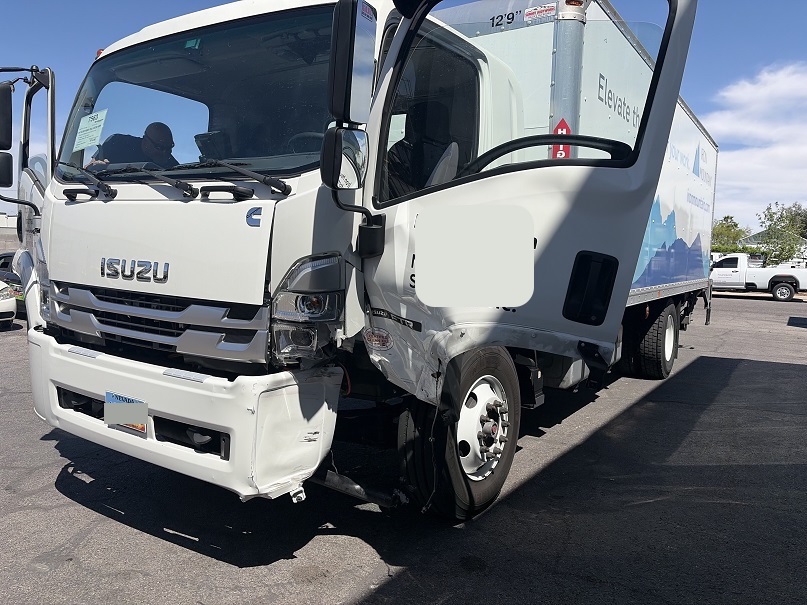
A bus out of service is a route running short. That single fact drives every decision in the repair, starting with the estimate.
First is documentation. Damage is photographed and assessed with the operator’s maintenance team before anything is disassembled. On a large vehicle, hidden structural damage behind a bent panel is common — finding it after the repair starts is what blows up timelines.
Then parts and scheduling. Large-vehicle panels are often longer lead-time items. The repair gets sequenced so the vehicle isn’t sitting in a bay waiting for a part that could have been ordered a week earlier.
The body work is a different discipline from car repair. Long panels telegraph every imperfection — a wave you would never see on a fender reads clearly down twenty feet of bus. The work gets blocked flat under guide coat, not eyeballed.
Refinishing should happen in one pass. A booth that can’t take the full length means repositioning the vehicle mid-job, and that risks visible banding down the side. Our booth is 65 feet, so full-size units go in whole.
Finally, livery and markings are reinstated to spec, and the unit goes back into rotation with a documented file the operator can close.